
Jazz
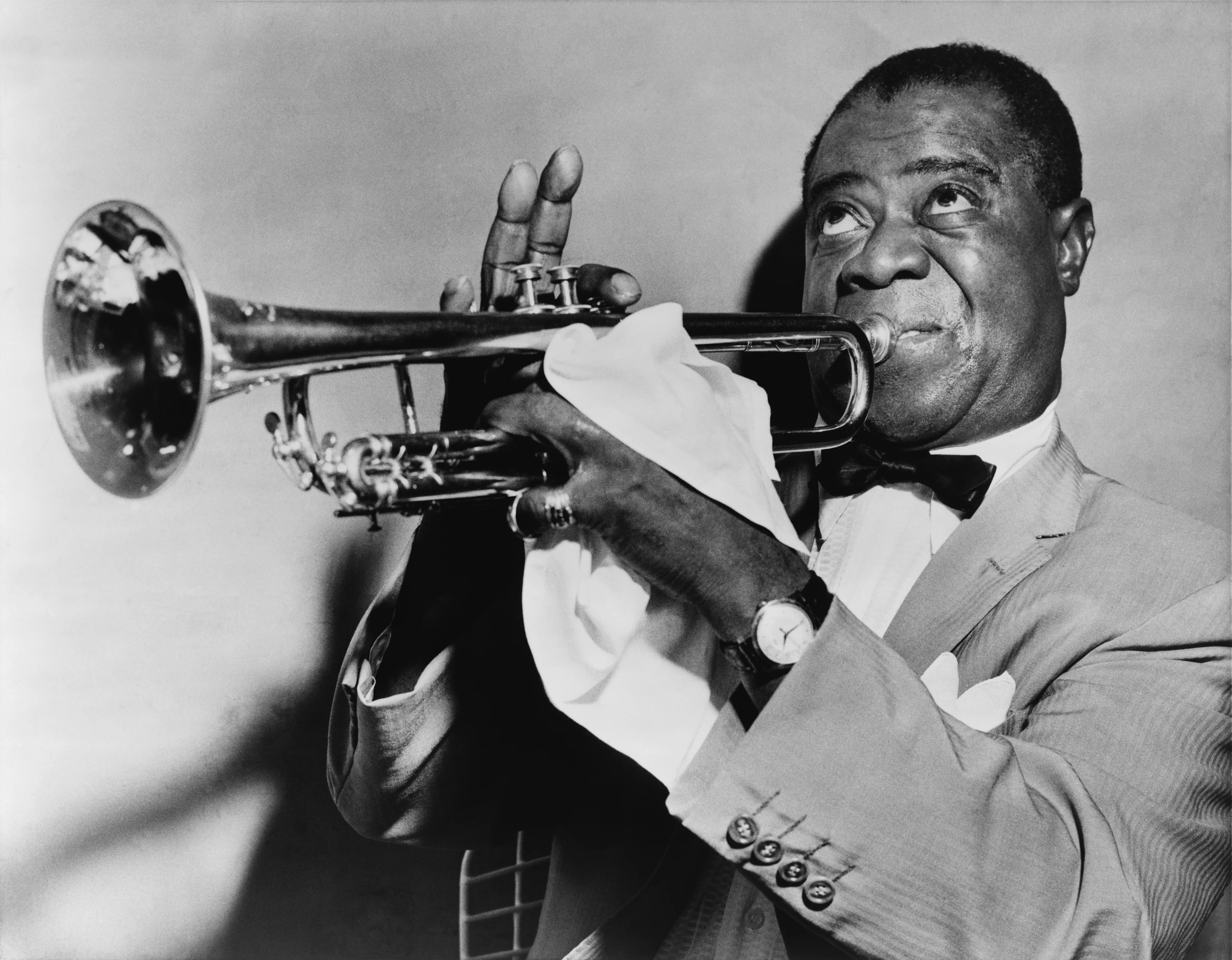
Image from Wikipedia
Image from Wikipedia
Jazz: The Art of Improvisation, Swing, and Constant Renewal
A Musical Style that Became Part of World Culture
Jazz is not a rigid style form but a vibrant musical language that emerged around 1900 in the southern states of the USA, primarily shaped by African American musicians. From the fusion of ragtime, blues, African rhythmic concepts, and European elements, an art form developed that has lived on improvisation, syncopated rhythms, and individual sound design since its beginnings. The history of jazz is therefore also a story of cultural self-assertion, artistic freedom, and constant reinvention. ([britannica.com](https://www.britannica.com/art/jazz?utm_source=openai))
As a musical universe, jazz defies any simple definition. The tradition ranges from New Orleans through swing, bebop, and cool jazz to free jazz, fusion, and contemporary hybrids that often blend with rock, funk, hip-hop, classical music, or electronic production. It is precisely this openness that makes the genre appealing: jazz is both historically rooted and radically contemporary. ([britannica.com](https://www.britannica.com/art/jazz?utm_source=openai))
Biographical Context: The Origins of Jazz
Jazz arose from the African American experience in the United States and is closely linked to the social, religious, and musical traditions of the South. In its early phase, collective music-making, call-and-response structures, blues intonation, and improvisational freedom shaped the style. The development of jazz did not progress linearly but in bursts: new playing styles emerged in cities like New Orleans, Chicago, Kansas City, and New York, further shifting the genre. ([britannica.com](https://www.britannica.com/art/jazz?utm_source=openai))
The term itself has been associated with music since 1915, but the cultural power of jazz was felt even before that. In retrospect, the genre appears as the American counterpart to classical European music: a complex art system with its own form language, virtuoso solos, compositional sophistication, and an enormous range of expressions. The fact that jazz is still referred to as an "American art form" underlines its historical significance far beyond mere entertainment music. ([britannica.com](https://www.britannica.com/art/jazz?utm_source=openai))
Musical Development: From Dance Halls to Art Music
The early history of jazz was closely tied to dance music, but soon the style evolved toward a more concentrated listening format. According to Britannica, jazz shifted from the dance floor into the realm of artistic reception with increasing harmonic complexity, more chord changes, and refined improvisation. The genre thus became a form of music that not only moves but is also analyzed, discussed, and historically contextualized. ([britannica.com](https://www.britannica.com/art/jazz?utm_source=openai))
Particularly influential was the idea of the improvising soloist. In jazz, the performer is not merely the executor of a work but a creative actor in their own right. Composition, arrangement, and ensemble interaction are as much part of the genre's DNA as spontaneous invention in the moment of performance. This connection between structure and freedom embodies the artistic tension of jazz and explains why it influenced musicians from classical music just as much as from pop, rock, and electronic music. ([britannica.com](https://www.britannica.com/art/jazz?utm_source=openai))
Stylistic Diversity: Bebop, Swing, Free Jazz, and Crossover
Jazz is an umbrella term for numerous epochs and expressions. Swing defined the popular access to the genre for years, while bebop in the 1940s recalibrated the tempo, harmony, and virtuosity. Later, hard bop, modal jazz, and free jazz opened the doors to even greater sonic and formal experimentation. Each of these chapters represents a different conception of what freedom in music can mean. ([britannica.com](https://www.britannica.com/art/jazz?utm_source=openai))
The development was never limited to the USA. Jazz was internationally received, further developed, and connected with local traditions. This is where one of its strongest cultural effects lies: the genre has not only produced new playing techniques but has also initiated a global dialogue between improvisation, tradition, and the present. ([britannica.com](https://www.britannica.com/art/jazz?utm_source=openai))
Influential Artists and Artistic Standards
Although jazz itself is not a solo artist, certain names have shaped its history to this day. Louis Armstrong is regarded as a pivotal figure in the early development, Charlie Parker as a revolutionary impetus for bebop, Duke Ellington as a master of orchestral sound, and Miles Davis as a stylistic innovator over several decades. These personalities exemplify jazz's ability to continually reinvent itself without losing its roots. ([britannica.com](https://www.britannica.com/art/jazz?utm_source=openai))
Charlie Parker, for example, is described by Britannica as one of the greatest revolutionary spirits of jazz; his melodic and harmonic concepts fundamentally changed the language of the genre. Miles Davis, on the other hand, embodies the idea of artistic adaptability, from bebop-inspired beginnings to later stylistic expansions. Such figures are not merely part of jazz history; they are its hinges. ([britannica.com](https://www.britannica.com/biography/Charlie-Parker?utm_source=openai))
Discography, Recordings, and Critical Reception
A classical discography in the sense of a single artist does not exist for jazz, but there is a rich culture of recordings with milestones, schools, and standards. Jazz has been documented through countless albums, sessions, and live recordings, and this recording culture has made the development of the genre traceable. The music thrives on interpretations, versions, and reinterpretations of well-known pieces; a standard in jazz is never definitively concluded. ([guides.loc.gov](https://guides.loc.gov/jazz-research?utm_source=openai))
The critical reception of jazz has always been closely linked to questions of innovation level, cultural authenticity, and musical complexity. Britannica describes how jazz transformed across different phases and how difficult it remains to formulate an all-encompassing definition. This precisely is where its prestige lies: jazz is not merely a style label but a continually open artistic process. ([britannica.com](https://www.britannica.com/art/jazz?utm_source=openai))
Cultural Influence: A Music That Has Changed Other Genres
Jazz has had an impact far beyond its own scene. It has exported harmony, timing, sound aesthetics, and improvisational thinking into other genres, leaving lasting marks there. Even in pop, film music, and experimental music, jazz-like principles keep resurfacing: flexible form, rhythmic displacement, individual tone production, and the idea of musical dialogue. ([britannica.com](https://www.britannica.com/art/jazz?utm_source=openai))
Institutions like the Smithsonian Jazz Project or the American Jazz Museum demonstrate that jazz is now understood not just as music but as a cultural memory. The Smithsonian describes jazz as a living cultural narrative of American society, while the American Jazz Museum celebrates it as an original American art form. This classification makes it clear that jazz is simultaneously an archive, the present, and the future. ([americanhistory.si.edu](https://americanhistory.si.edu/explore/projects/smithsonian-jazz?utm_source=openai))
Current Perspective: Why Jazz Remains Relevant Today
Jazz remains current because it is based on openness. The genre is adaptable to new modes of production, global scenes, and an audience that seeks both musical depth and spontaneous energy. The ongoing activities of the Smithsonian Jazz Program and the continued research on jazz heritage prove that this music is not frozen in the museum but is continuously being thought through. ([americanhistory.si.edu](https://americanhistory.si.edu/explore/projects/smithsonian-jazz?utm_source=openai))
In an era when genres are often strictly marketed, jazz remains a space for individual expression and collective interaction. Its aesthetics demand attention, listening readiness, and trust in the unpredictable. This is precisely what makes it so exciting for music lovers: every evening, every recording, every interpretation can yield a new truth. ([britannica.com](https://www.britannica.com/art/jazz?utm_source=openai))
Conclusion: Why Jazz Remains Immortal
Jazz fascinates because it lives freedom not as a buzzword but as a working principle. It connects history with the present, virtuosity with emotion, composition with improvisation, and local origins with global impact. Those who listen to jazz do not experience a static style form but rather an art in motion. ([britannica.com](https://www.britannica.com/art/jazz?utm_source=openai))
Especially live, jazz unfolds its greatest power: in the moment of interaction, in the risk of the moment, and in the immediacy of sound. Those who truly want to understand the depth of this music should experience it on stage, where improvisation, tension, and expression meld into a unique event. ([americanhistory.si.edu](https://americanhistory.si.edu/explore/projects/smithsonian-jazz?utm_source=openai))
Official Jazz Channels:
- Instagram: No official profile found
- Facebook: No official profile found
- YouTube: No official profile found
- Spotify: No official profile found
- TikTok: No official profile found
Sources:
- Britannica – Jazz: Definition, History, Musicians, & Facts
- Britannica – Charlie Parker: Biography, Music, & Facts
- Britannica – Miles Davis: Albums, Biography, & Facts
- National Museum of American History – Smithsonian Jazz
- National Museum of American History – Smithsonian Jazz: Concerts & Recordings
- American Jazz Museum – About
- Library of Congress – Jazz Research Guide
- Wikipedia: Image and text source
Upcoming Events
Concert with "ClarinetJAZZcorp"
Jazzy-Chaos in the Jungle
The Jazz Room
Allotria Jazzband – Tribute to Duke Ellington
United by Jazz - What Art and Jazz Connects
Concert at werk3 - Jazz Noise Septet
Classical Meets Jazz: Trio Mojazzart in Biberbach
Fuchsthone Orchestra & UMO Jazz Orchestra
Fuchsthone Orchestra | UMO Helsinki Jazz Orchestra feat. Jazzmeia Horn