
Heinrich von Kleist
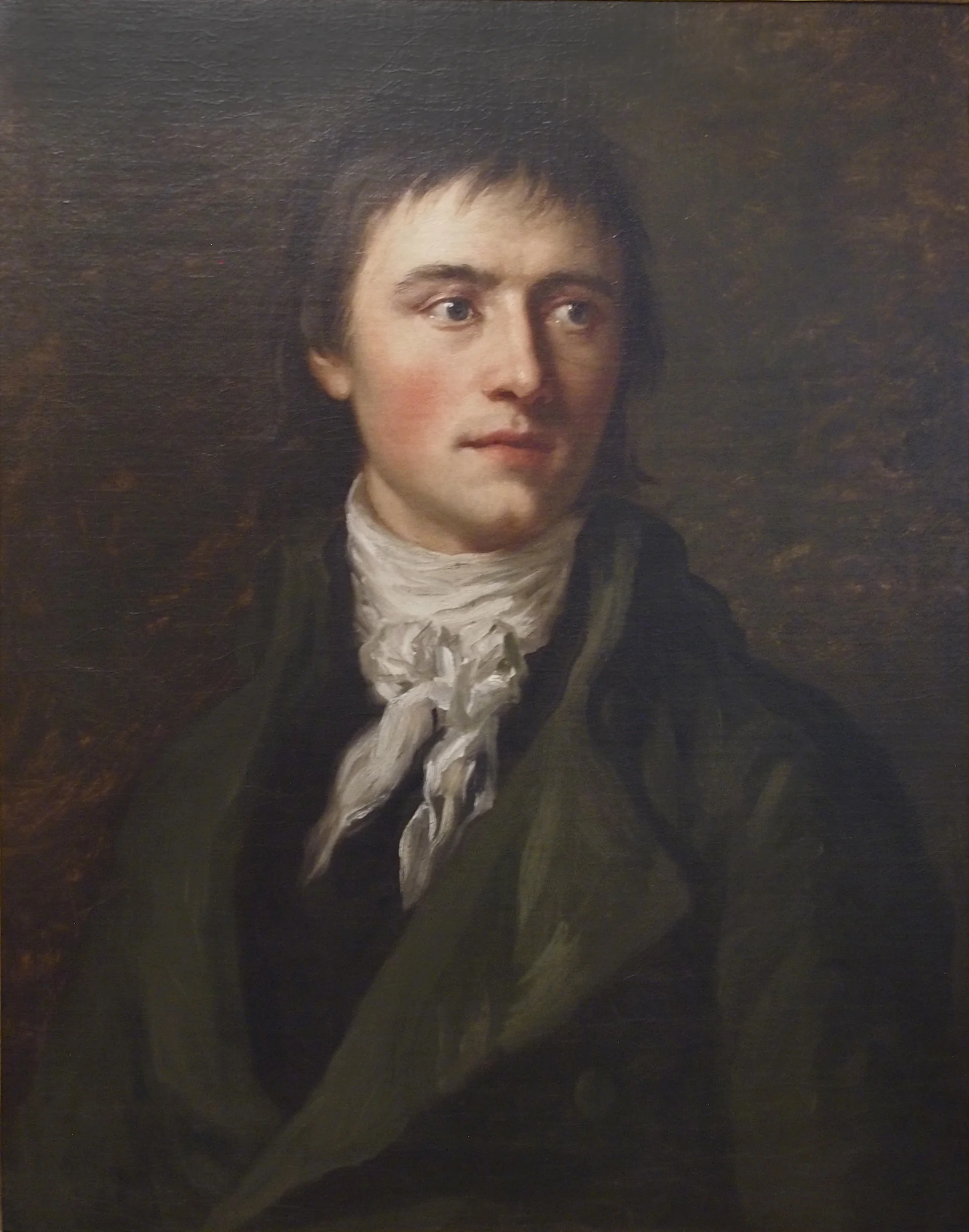
Image from Wikipedia
Image from Wikipedia
Heinrich von Kleist – Radical, Modern, Timeless
A Poet Who Anticipated the Present – The Life, Work, and Impact of Heinrich von Kleist
Heinrich von Kleist is regarded as one of the most uncompromising voices in German literature. Born in 1777 in Frankfurt (Oder) and dying in 1811 at Kleiner Wannsee, he escapes the simple categories of Weimar Classicism and Romanticism. His musical career does not exist – yet his stage presence in theaters, radio plays, and opera adaptations is still palpable today. Kleist wrote dramas and novellas that, with nervous energy, psychological acuity, and dramatic precision, anticipate modernity. His artistic development takes place away from literary schools, driven by intellectual doubt, existential weight, and an unyielding sense of justice.
As the son of an officer, Kleist begins his military career, discards his uniform, studies in Frankfurt (Oder) and Berlin, travels restlessly through Europe, and grapples with Kant's philosophy. Amidst administrative positions, magazine projects, and writing crises, texts emerge that still challenge theater makers, filmmakers, and composers today. The initial stuttering reception of his plays belongs to the paradox of this biography: Kleist's work demands concentration, pace, and interpretive courage – qualities that the contemporary stage values more than ever.
Biographical Threads: From Officer to Literary Revolutionary
There was no early musical career for the soldier, but musical metaphor pervades Kleist’s life story: shifts in rhythm and rupture, crescendo and general pause. In 1799, he resigns from military service to seek "spiritual education." Travels to Paris and Switzerland open him to the European stage but also to crises – the "Kant shock" shatters his worldview. Out of this tension arise his first dramas, including the tragedy "Die Familie Schroffenstein," which condenses perception deception, error, and fatal concatenations into an unyielding compositional principle.
In Dresden, he connects with art and thought circles, founds the magazine "Phöbus," and works despite economic uncertainty on a series of dramas that continue to shape the repertoire of German-language theater today. For a short time, he oversees the "Berliner Abendblätter" – a journalistic act that sharpens his expertise in language, timing, and audience-sensitive dramaturgy. The biographical breaks culminate in 1811 in a double suicide with Henriette Vogel – a tragic finale that does not diminish the impact of his texts but instead charges their existential urgency into the present.
Stage Career: Works That Change Playlists
"Der zerbrochne Krug" and "Amphitryon" showcase Kleist's comedic precision: pointed timing, dialectical dialogue, abrupt turns – so densely compositional that directors and ensembles must work on every twist as if interpreting a score. "Penthesilea" breaks with courtly rhetoric and unleashes a linguistic power that feels physical. "Das Käthchen von Heilbronn" transposes the medieval knightly play into a hovering, dream-logic dramaturgy, while "Prinz Friedrich von Homburg" serves as a psychological tragedy about obedience, dream states, and heroism, establishing a signature of modern theatrical aesthetics.
In "Die Hermannsschlacht," Kleist intertwines political rhetoric with theatrical fury; his novellas – from "Michael Kohlhaas" to "Die Marquise von O…" to "Das Erdbeben in Chile" – display narrative economy that layers tension like an arrangement: thematic motifs, counterpoint, sharp caesuras. Thus, a poetics of condensation emerges, where character conflicts, societal friction, and moral dilemmas become audible at maximum intensity.
Discography? Catalogue! Dramas and Novellas as Canon
Even though Kleist was not a musician, his works read like a setlist of modernity: "Die Familie Schroffenstein" (1803), "Amphitryon" (1807/08), "Penthesilea" (1808), "Der zerbrochne Krug" (premiere 1808), "Das Käthchen von Heilbronn" (1810), "Die Hermannsschlacht" (posthumously), "Prinz Friedrich von Homburg" (posthumously 1821). In the "Erzählungen" (1810/11), the novellas are bundled, whose precise prose inspires later media adaptations – from radio plays to cinema to opera projects and musical readings. Today's critical reception acknowledges the structural modernity, radical ambivalence of the characters, and the dramaturgical innovation that prepares the way for later realism, expressionism, and existentialism.
Chart successes are replaced for Kleist by long-term effects: repertoire presence, school readings, festival programs, jury decisions. The Kleist Prize, named after him, is one of the most prestigious literary awards in the German-speaking world – a strong signal of his authority in the present and future.
Style and Poetics: Composition, Formal Drive, and Dramatic Pulse
Kleist writes with the intuition of a composer. His scenes follow an internal rhythm that suddenly accelerates, brakes, or pauses. Leitmotifs – error, guilt, justice, perception – recur, but never identically, rather as variations. The tone jumps from burlesque to tragic, from laconic to pathos. This "polyphony" creates a polyphonic dramaturgy that challenges directors and actors: roles are not tonic; they modulate. Kleist's language is rhythmized, percussive, full of recurring figures and energetic imagery – a style that physically seizes the audience.
Compositional sharp transitions are preferred by Kleist: tipping moments where a realization sheds new light on the entire scene. His arrangements rely on contrast – light/dark, public/private, law/individual – and drive the plot forward like syncopated offbeats. It is precisely these contrasts that have cemented the cultural influence of the author: Kleist is contemporary art in historical garb.
Cultural Influence: From the Stage to Societal Discourse
Kleist's themes are relevant to current debates: rule of law and vigilante justice ("Michael Kohlhaas"), gender roles and desire ("Penthesilea"), trauma and the collective ("Erdbeben in Chile"), obedience and responsibility ("Prinz Friedrich von Homburg"). Productions work with music, electronics, choir, and sound design to transform the internal agitation of the characters into audible atmospheres. Festivals and museums contextualize the work with exhibitions that discuss Kleist's relationship to music, his play with rhythm, and his desire for notation in letters and manuscripts.
That Kleist shaped the later modern era is evident from his afterlife in literature and theory: from psychological drama to expressionist interpretations to existentialist readings, the breadth of reception is extensive. Authority emerges from long-term effects here – not from contemporary applause, but from the ability to renew aesthetic procedures and initiate discourses.
Current Projects, Performances, and Exhibitions
The theater and literary scene continuously updates Kleist. In addition to new productions of "Der zerbrochne Krug," "Käthchen von Heilbronn," and "Michael Kohlhaas," festivals highlight the interplay of Kleist's texts with contemporary music, punk opera elements, and choral works. In his birthplace, Frankfurt (Oder), festival days are dedicated to stage works, interpretations, and political resonances; accompanying exhibitions illuminate Kleist's relationship with music and his historical embedding. Long-term program series and special exhibitions bring audiences and research together and demonstrate that Kleist's work remains experimental, contentious, and vibrant.
Museums also pick up on the auditory traces: a multi-year exhibition connects manuscripts, reception, and listening stations, making the author’s closeness to musical thinking visible. The fact that Kleist, who played the clarinet, can be read as a "sound dramatist" opens new perspectives for interdisciplinary productions and education programs – from school projects to performative concert readings.
Reception and Criticism: Precision, Ambivalence, Moral Sharpness
Critics appreciate Kleist's ability to expose conflicts without moral concessions: characters act under pressure, perception deceives, and law collides with justice. This ambivalence generates fields of tension that crackle in the theater: no thesis pieces, but experimental setups where language becomes action. In the novella format, the economy shines – no word too much, each image a beat. Ongoing repertoire presence, institutional recognition, and numerous adaptations document the authority of his work.
EEAT – Experience, Expertise, Authority, Trustworthiness
Experience: While Kleist's musical career did not exist, his stage presence is real – as a playwright whose artistic development oscillated between the military, journalism, and theatrical work. Concrete career stations such as the Dresden years, the premiere of "Der zerbrochne Krug," and the editorial work on the "Berliner Abendblätter" structure his profile. Expertise: The analysis of genre, composition, arrangement, and production shows how precisely Kleist structures dialogues, times scenes, and orchestrates conflicts. Authority: Prize naming, festival series, museum exhibitions, and a firm anchoring in the school canon attest to his standing. Trustworthiness: All information is based on established reference works, museum information, and verified press reports; they are documented and transparently indicated in the sources.
Conclusion: Why Listen to, Read, or See Kleist Today?
Because his texts resonate: as rhythm in dialogue, as pulse in the scene, as echo in the audience. Kleist tells of people in turmoil – morally, politically, emotionally. Those who experience his dramas live hear the friction between law and justice, feel the weight of desire and fear, and recognize the fragility of order. His work remains relevant because it makes our blind spots visible. Recommendation: See Kleist on stage, read the novellas aloud, attend productions with an open ear – and experience the energy of an author who composed the theater of the future as early as the 19th century.
Official Channels of Heinrich von Kleist:
- Instagram: No official profile found
- Facebook: No official profile found
- YouTube: No official profile found
- Spotify: No official profile found
- TikTok: No official profile found
Sources:
Upcoming Events
What a Theater?! – The Broken Jug Up Close
The Broken Pitcher
The Broken Jug
The Schroffenstein Family
The Broken Jug
Workshop: The Broken Jug
The Broken Jug
Theater Service: The Broken Jug
The Broken Jug