
Element of Crime
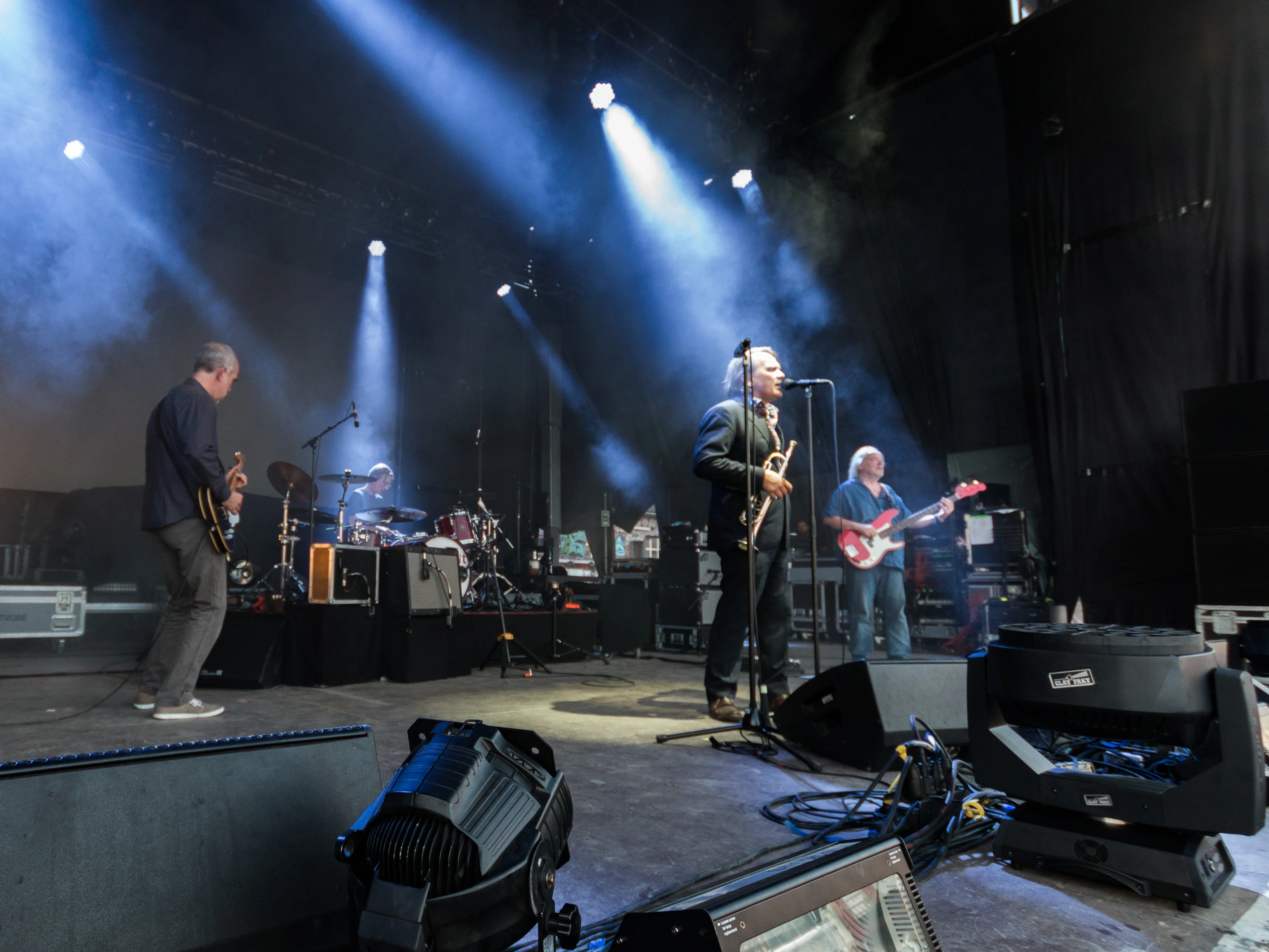
Image from Wikipedia
Image from Wikipedia
Element of Crime – Melancholy, Chanson-Pop, and Great Storytelling from Berlin
A German rock band that has been crafting sound poetry since 1985 – balancing chanson, folk rock, and urban storytelling
Since its founding in 1985, Element of Crime has been one of the defining voices of German-speaking pop culture. Established in Berlin around singer, trumpeter, and author Sven Regener, the band evolved from its English-speaking beginnings into a distinctive German chanson-rock aesthetic. Their musical career combines poetic lyrics, finely shaded arrangements, and a stage presence that unites intimacy and grandeur. With guitars, trumpet, accordion, gentle grooves, and laconic imagery, Element of Crime distills the mundane into timeless songs – sometimes tender, sometimes sharply edged, always driven by artistic development.
Biography: From a Divided City to a Grand Band History
The band was formed in 1985 in West Berlin. Early performances in clubs and the atmosphere of the wall city shaped their sound – rough, urban, yet with a sense for melody and nuance. After several English-language releases, the switch to German with "Damals hinterm Mond" in 1991 marked a groundbreaking course correction. The laconic tone, the observant narrative perspective, and the poetic precision became trademarks. Guitarist Jakob Ilja has shaped the sound since the early years, while drummer Richard Pappik joined in 1986, refining the rhythmic foundation between slow rock, ballad, and chanson-like pulse.
Frontman Sven Regener also distinguished himself as a novelist and screenwriter – a dual role that fueled the band's lyrics. The literary perspective, casual irony, and cinematic imagery in the texts reflect this experience. The long lines of their career – studio, stage, book, film – mutually influence one another and lend cultural depth to the group.
Career Progression: Continuous Artistic Development Instead of Quick Effects
The 1990s were characterized by the consolidation of their German-language style. In the 2000s, the band reached a broad audience: "Mittelpunkt der Welt" (2005) opened doors, and "Immer da wo du bist bin ich nie" (2009) climbed to number 2 on the German charts, confirming the group's authority in both the feuilleton and pop landscape. Element of Crime remained true to their aesthetic while refining it – with warm guitar tones, pointed brass colors, and careful production that allows the space between voice and arrangement to breathe.
After a longer release hiatus, they returned in 2018 with "Schafe, Monster und Mäuse" – a late work full of calm, warmth, and subtle force. In 2023, they followed with "Morgens um vier": a late masterpiece that brings forth the typical narrative style – cityscapes, nocturnal images, smoky humor – in elegant, transparent arrangements. The compositions rely on economy of means, small harmonic shifts, and subtle dynamics.
Current Projects 2024–2026: Film, Live Album, and Concert Halls
In 2024, the band once again stepped into the spotlight with the documentary film "Element of Crime in: Wenn es dunkel und kalt wird in Berlin," directed by Charly Hübner. The film, which premiered nationally in cinemas on October 1, 2024, weaves concert footage, Berlin's topography, and conversations with band members into a migration-free perspective on their work and stance. A live/original soundtrack album was released simultaneously on Vertigo Berlin/Universal – a distillation of stage energy that makes their rich repertoire audible in nuanced live production.
In 2025, Element of Crime toured under the motto "Unscharf mit Katze" – a title reflecting their lyrical playfulness and imagery. In 2026, they will continue this musical journey: The "Konzerthaustournee" will take the band to seated venues, from the Tonhalle to the Gewandhaus, focusing on acoustic elegance, lyrical clarity, and the chamber music nuances of their songs. Bavarian venues are also on the schedule, emphasizing the band’s presence in the south.
Discography Overview: Albums That Became Classics
Among their early English-language releases is the debut "Basically Sad" (1986). With the German-language restart in 1991, significant milestones followed. "Mittelpunkt der Welt" (2005) and "Immer da wo du bist bin ich nie" (2009) anchored the group in the album charts and in the collective memory of many listeners. "Schafe, Monster und Mäuse" (2018) displayed maturity without self-quotation, while "Morgens um vier" (2023) updated their handwriting with viable melodies and precise production. In 2024, the live/OST "Wenn es dunkel und kalt wird in Berlin" was released, documenting the stage as a second living space for their songs.
Singles like "Weißes Papier" and "Mittelpunkt der Welt" established a poetic pop language beyond temporary trends. The discography demonstrates how a distinct genre can be shaped at the intersection of chanson, folk rock, and literary pop: not as a calculation but as a consequence of aesthetic decisions.
Style and Sound: Chanson-Rock with Trumpet, Guitar Poetry, and Space for Words
Element of Crime work with a sound architecture that prioritizes voice and lyrics while maintaining a warm, organic instrumentation. The trumpet adds color splashes between jazz nuances and march citations, guitars shift between twang, folk, and restrained distortion, while the rhythm section keeps a relaxed tempo. Composition and arrangement emphasize reduction: few chords, small melodic echoes, plenty of air. This production technique gives the songs lasting impact – they resonate in quiet moments just as well as in grand halls.
The singing utilizes the speech-based cadence of chanson but varies it with pop phrasing and bluesy expressions. Harmonically, much remains diatonic, yet modal shades and surprising subdominants introduce friction. Lyrically, this creates a cinema in the mind that invokes vast spaces with minimal props – neon lights, rain, city traffic.
Lyrics and Cultural Influences: Big City, Literature, Laconic Humor
The lyrics of Sven Regener translate urban experiences into precise miniatures: kiosks, backyards, night buses, slanted romance. The laconic humor makes the melancholy feel alert. Literary side paths – novels and screenplays – are reflected in the imagery of the songs. The band's name also refers to Lars von Trier's "The Element of Crime," thus providing a cinematic foundation. The late 1980s music history in Berlin – post-punk, NDW aftershocks, indie – lingers without the band ever becoming a mere quotation device.
The cultural connectivity extends from the feuilleton to the club stage: Element of Crime is among the few groups that appear in both pop rankings and literary discussions. This dual coding – pop band with an author's spirit – makes their influence on younger German-speaking songwriters understandable.
Critical Reception and Awards: Authority Through Consistency
For years, the music press has acknowledged the band's balance of continuity and renewal. "Immer da wo du bist bin ich nie" (2009) marked their greatest chart success and exemplifies the intersection of audience proximity and artistic integrity. Even late works like "Morgens um vier" (2023) are regarded as mature developments of their catalog – precise language, controlled emotions, sovereign production. The concert film released in 2024 solidified the impression of a band that triumphs on stage in slow motion: through timing, dynamics, and awareness of the impact of quiet tones.
Beyond awards, the group's authority lies in building a consistent oeuvre over decades that connects generations. The fact that the band sounds equally convincing in large venues as in clubs underscores the compositional sustainability of their material.
Lineup and Change: Continuity with Open Flanks
Alongside Sven Regener, Jakob Ilja, and Richard Pappik, British bassist David Young shaped the sound for a long time. His death in 2022 marked a turning point, but the band continued working in his spirit; Markus Runzheimer took over on bass. This personnel change did not fundamentally alter the tone – rather, it sharpened the ensemble spirit that has always prevailed at Element of Crime over virtuoso gestures. Live productions and the concert tour demonstrate how closely sound, text, and dramaturgy interact.
The current performances emphasize dynamic arcs: a reduced start, narrative development, and a late crescendo. This dramaturgy reflects the band's poetics – stories unfold slowly, point and pain lie close together, and the audience becomes part of the narrative.
Live Qualities: Chamber Music Intimacy in Large Spaces
On tour, Element of Crime cultivates a stage presence that amplifies the quieter tones. The audience experiences the songs like short films: every line falls into the right place, every trumpet phrase serves as a source of light. In concert halls, an acoustic intimacy emerges that carries the lyrics; in open-air settings, the music blends into urban backdrops. The band curates set lists with a view toward their overall work and allows rarely heard pieces alongside classics – an attitude that combines respect for the catalog with a taste for risk.
This live culture culminated in 2024 in the documentary portrait and its live/OST album – a sound document for a band that does not manage its history but keeps it alive.
Conclusion: Why Element of Crime Sounds More Important Today Than Ever
Element of Crime represents an art that tells patiently, is musically sparse yet effectively orchestrated, and takes life seriously without pathos. Their artistic development shows that consistency and curiosity are not opposites. Those who want to hear German pop history listen to this band – for the language, the melodies, the tone between comfort and irony. The outlook beyond 2026 promises more concerts of rare elegance. Recommendation: experience live – to understand how great music arises from small gestures.
Official Channels of Element of Crime:
- Instagram: No official profile found
- Facebook: No official profile found
- YouTube: No official profile found
- Spotify: No official profile found
- TikTok: No official profile found
Sources:
- Element of Crime – Official Website
- Universal Music – Element of Crime: Videos
- Rolling Stone – Review "Morgens um vier," April 7, 2023
- laut.de – Band Biography and Chronology
- Apple Music – "Wenn es dunkel und kalt wird in Berlin" (Live/OST), 2024
- Deutschlandfunk Nova – Contribution to the Band Documentary, 2024
- taz – Review of the Documentary, 2024
- Kino.de – Film Profile and Release Date, 2024
- Koopmann Concerts – Tour Information 2026
- hitparade.ch – Chart and Work Overview
- Wikipedia: Image and Text Source
Upcoming Events
Ulmer Zelt 2026 - Cultural Festival in Ulm
Element of Crime – Concert Tour
Element of Crime live in Bonn: Concert Hall Tour at Quatsch keine Oper
Element of Crime
Dachau Music Summer – ELEMENT OF CRIME
Dachau Music Summer – ELEMENT OF CRIME
Element of Crime - Concert House Tour
Dachau Music Summer – Element of Crime – Sold Out