
Daniel Gerlach
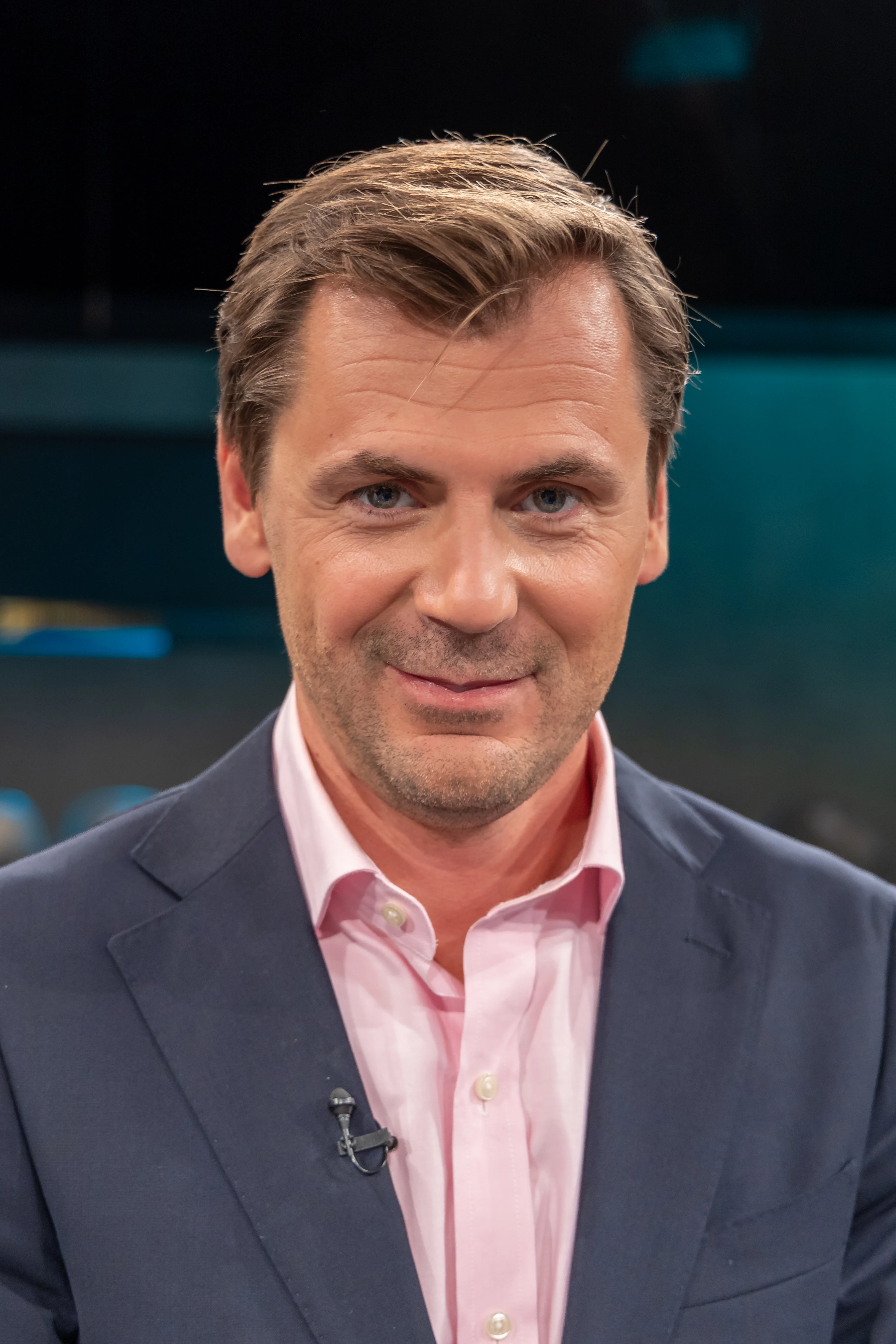
Image from Wikipedia
Image from Wikipedia
Daniel Gerlach – Author, Publicist, Orientalist, Middle East Expert
A passionate storyteller of the Middle East: How Daniel Gerlach shapes debates, brings history to life, and combines journalistic precision with cultural depth
Daniel Gerlach, born in 1977 in Wuppertal, is one of the influential voices making the Middle East understandable for a German-speaking and international audience. As a co-founder, co-editor, and editor-in-chief of the magazine zenith, he has shaped a journalistic platform that situates the region's conflicts, cultural history, and societies in a well-founded context. His music career? He has none – yet his stage presence as a sought-after interview guest, speaker, and conversational partner on television formats and at conferences gives his analyses the immediacy of a live performance. With clear language, historical depth, and a recognizable artistic evolution in his style, Gerlach guides his audience through complex layers of diplomacy, power politics, and everyday reality.
Biography: From Wuppertal to the World of the East
Growing up in the Rhineland, Gerlach studied history and Islamic studies/Orientalism at institutions including the University of Hamburg and the Université Paris-Sorbonne (Paris IV). Early on, he combined academic curiosity with journalistic practice. In 1999, he co-founded the magazine zenith with fellow students – a project that evolved from a student initiative to a respected editorial office. This starting point marked his breakthrough as a publicist, consistently translating his experience from field research, interviews, and archival travels into accessible, well-narrated analyses.
His artistic development as an author is reflected in how he intertwines historical narratives with contemporary politics: He writes about state formation, law, religious identities, and power resources – placing events within larger cycles. Instead of providing schemas, he offers constellations; instead of slogans, he provides context. The musicality of his prose lies in the balance of tempo and calm: dense condensation, then expansive perspectives; recurring leitmotifs such as empires, border spaces, and diplomacy appearing in new configurations.
Journalistic Career and Editorial Signature
As editor-in-chief of zenith, Gerlach is responsible for the editorial direction of a magazine that combines journalistic reporting, historical contextualization, and science-based analysis. In his music career, there would be a “discography” – in his journalistic practice, the “discography” metaphorically encompasses dossiers, essays, interviews, and reports that create a coherent soundscape of the region through the arrangement of text, image, and data. This production occurs in a team, but Gerlach's curatorial authority shapes the dramaturgy and tonality: contextualizing, precise, against alarmism.
Beyond zenith, Gerlach writes and speaks regularly for major media organizations and formats. His appearances on news broadcasts, magazines, and talk shows bring the resonance of his work to a larger stage. He conveys backgrounds without mystifying them – a stage presence derived from experience, proximity to sources, and the ability to clearly identify conflict mechanisms.
Publications and Reception: Books as Long-form Analysis
With his book “The Middle East is Not Declining – The Arab World at its Historical Opportunity” (Edition Körber), Gerlach presented a comprehensive assessment that goes beyond current politics to inquire about historical continuities. The composition of the book follows the principle of a suite: chapters as thematic movements – about state formation, sectarianism, regimes of violence, transformational opportunities – that together provide a panorama. In interviews, essays, and excerpts, the work has been discussed as a counterpoint to one-dimensional crisis narratives: critical of simplifying terms, interested in institutional realities and the agency of local actors.
Reviewers highlight the dense research, clear language, and willingness to differentiate. Rather than a linear narrative of progress, Gerlach is interested in how societal power fields operate: legal systems, religious orders, patronage, oil economies, border delineations. This perspective makes the book relevant for diplomacy, foreign policy, and civil society – and explains why it is often referenced in debates, panels, and media contributions.
Style, Method, and Artistic Development of Writing
In his expertise, Gerlach combines historical source work with reporting techniques. His style reflects the school of explanatory, illustrative journalism: strong openings, precise terms, vivid examples, clear causalities. He works with internal contrasts – macro and micro, past and present, norm and practice – thus emphasizing points that guide the audience through complex material. Musically speaking: He varies tempo and dynamics, alternates between close-ups and wide shots, structures chapters like the movements of a sonata, where motifs recur and evolve.
This artistic development is also an ethical one: away from quick judgments, toward substantiality – requirements for evidence, source criticism, methodological transparency. In the production of journalistic content, the Editor’s Note stands for trustworthiness: What is a source, what is a conclusion, which terms are analytically robust, which carry unreflected value judgments? This results in work that meets EEAT criteria: experience from decades of Middle East reporting, expertise in history and Islamic studies, authority through recognized platforms, and trustworthiness through verifiable facts.
Institutions and Projects: Candid Foundation and zenithCouncil
As director of the Candid Foundation based in Berlin, Gerlach, together with partners, oversees projects in the fields of dialogue, mediation, and knowledge transfer. This institutional embedding extends the scope of his work: from editorial to political education, from analysis to practice. With the zenithCouncil, the research and consulting group, he works on statehood, law, and governance in the Arab world. This work creates feedback effects on his texts: concepts sharpened in workshops and expert discussions flow into essays and interviews – and vice versa.
In this dual role – journalist and project designer – the focus shifts from mere observation to shaping expertise. The arrangement question here is: How do you orchestrate research, media, civil society, and decision-makers to transform robust insights into actionable knowledge? Gerlach answers this with multilingual publication, partnerships, and formats that build bridges between think tank, editorial office, and the public.
Media Presence: Appearances, Debates, Current Projects (2024–2026)
Between 2024 and 2026, Gerlach’s appearances in major news and talk formats intensified. In the Tagesthemen (May 22, 2024), he contextualized the discussion on recognition steps regarding Palestine, clarifying how diplomatic options and legal frameworks are intertwined. In 2025, he spoke in several TV formats about the escalation logic in Gaza and the Gulf, later on the strategic role of regional actors. On March 2, 2026, he was part of a special edition of Markus Lanz regarding the escalation in the Middle East – an example of his ability to ground real-time events historically and make them understandable with sober language.
Concurrently, he oversees projects at the Candid Foundation and continuously publishes essays and interviews – a production that resembles a release regime: short, pointed “singles” (articles, commentaries), flanked by “longplayers” (books, dossiers). This dense publication sequence keeps the debate dynamic and ensures that analyses are taken up in politics, civil society, and media.
Themes and Contextualization: Diplomacy, Law, Identity
Gerlach’s thematic thread is diplomacy as a practice under conditions of imperfection: In the region he examines, parallel justice systems, informal orders, external influence zones, and fragmented sovereignties exist. His texts show how decision-making processes actually unfold – beyond ideal-type models. A second guiding theme: identity politics and “sectarianism.” Instead of merely referencing the term, he dissects its effects: resentment, affiliations, border delineations – and the question of how the rule of law and social compromise can unleash counter-forces.
It is precisely in this that his cultural influence lies: He shifts perception away from shocking images toward structures, actors, and interests. This altered listening habit – metaphorically speaking – changes how we “hear” and “read” news. It is a training of the ear for subtones, for nuances of political language, for the arrangement of power.
Cultural Influence and Reception
Gerlach acts as a translator between worlds: He introduces German and European audiences to discourses being negotiated in the region, while simultaneously reflecting how European politics are perceived on the chessboard of the Middle East. In interviews, essays, and panels, his authority is established not through volume but through accuracy. Critics praise the resilience of his arguments against fashionable theories and buzzwords. His texts – whether in magazines, radio contributions, or book form – are received in academia, journalism, and political communication.
Additionally, his curatorial influence as editor-in-chief is significant: He provides a platform for voices from the region, ensures editorial standards, and protects differentiation against oversimplification. Thus, he exerts influence not only through his own writing but also within the production aesthetic of political reporting – an impact that is not measured in click numbers but in the quality of discourse.
Conclusion: Why Daniel Gerlach Should Be Read and Heard Today
Anyone who wants to understand how the Middle East functions needs texts that filter out the noise without downplaying the weight of events. This is exactly what Daniel Gerlach achieves: He composes analysis, history, and diplomacy into a soundscape that does justice to complexity. His experience from reporting, conversations, and projects, his expertise in history and Islamic studies, his authority as editor-in-chief and director, and his reliable sourcing create trust.
The recommendation is obvious: Read his books, follow his analyses, and experience him live in talks, lectures, or interviews if possible. His work invites you to hear the seemingly familiar anew – and to understand politics not as noise but as a multifaceted score.
Official Channels of Daniel Gerlach:
- Instagram: No official profile found
- Facebook: No official profile found
- YouTube: No official profile found
- Spotify: No official profile found
- TikTok: No official profile found
Sources:
- Daniel Gerlach – Wikipedia
- Bio – Daniel Gerlach (official website)
- Projects – Daniel Gerlach (official website)
- Körber Foundation – The Middle East is Not Declining (Book page)
- ZDF – Markus Lanz from March 2, 2026
- tagesschau.de – Recognition of Palestine, May 22, 2024
- zenith – Staff Wednesday: Daniel Gerlach
- Candid Foundation – Who we are
- X/Twitter – Daniel Gerlach (@DanielGerlach1)
- Wikipedia: Image and text source