
Charles Simic
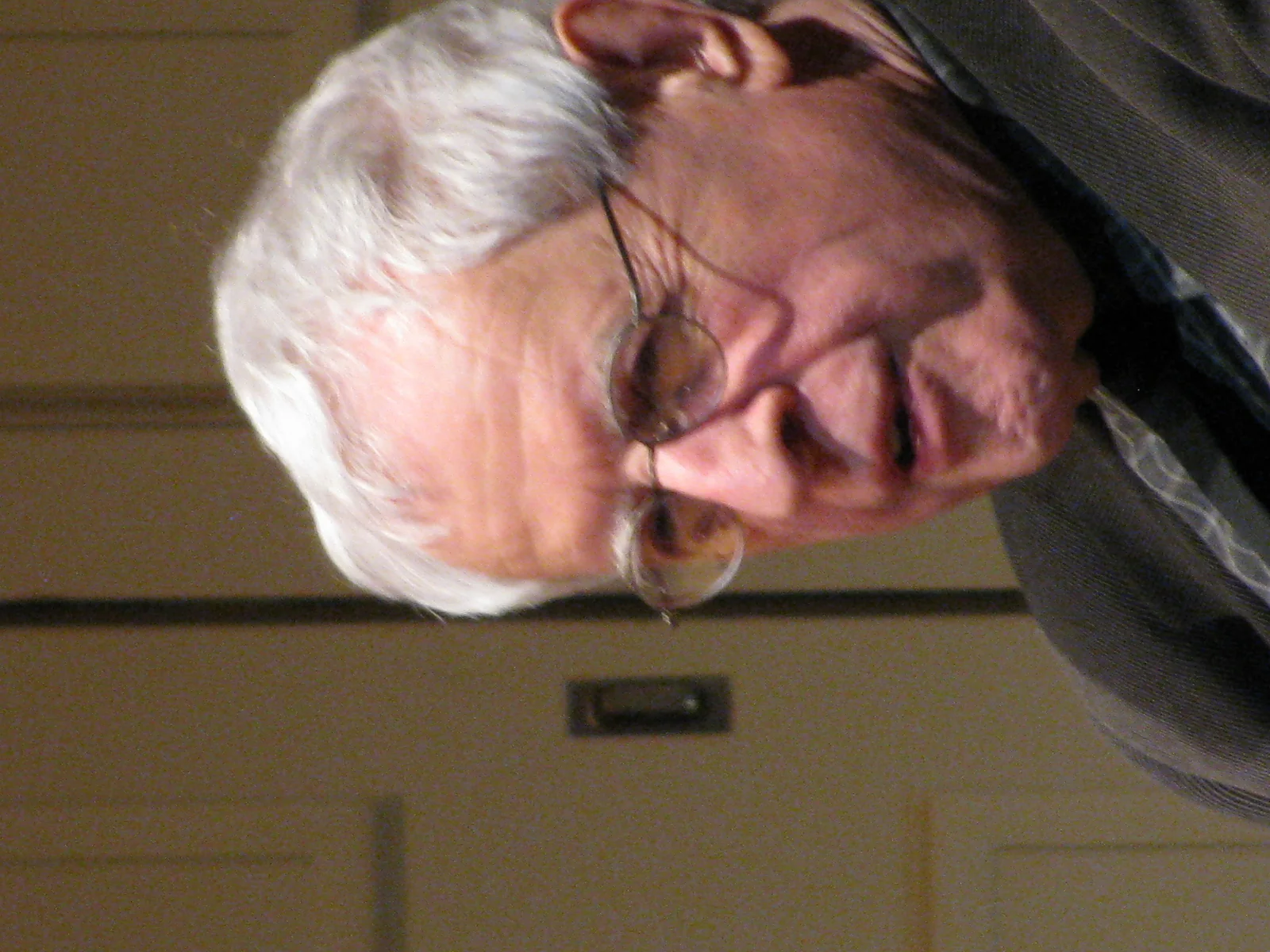
Image from Wikipedia
Image from Wikipedia
Charles Simic – The Great Wordsmith Between Exile, Memory, and American Modernity
A Life Between Two Worlds: Charles Simic as a Voice of the 20th Century
Charles Simic was not a musician but one of the most distinctive and significant poets in American literature. Born in 1938 in Belgrade as Dušan Simić and passing away in 2023 in Dover, New Hampshire, he combined the experiences of war, flight, and cultural uprooting in his work with a unique poetic precision. His texts became literary soundscapes: concise, vivid, sharply observant, and often imbued with bitter humor.
As a Serbian-American essayist, translator, and Poet Laureate of the United States, Simic shaped a generation of readers who sought neither pathos nor academic detachment in his poetry, but a poetic truthfulness of great physical and intellectual intensity. It is precisely this tension between external sobriety and internal vigilance that continues to define his significance today.
Biography: From Belgrade to Paris to Chicago
Charles Simic's childhood was marked by the upheavals of World War II. The family had to flee multiple times from bombings and political violence, and this early experience of insecurity and loss remained a fundamental tone in his later writing. At the age of 15, he moved to Paris with his mother; a year later, the family reunited in New York and moved to Oak Park near Chicago, where Simic attended the same high school that had influenced Ernest Hemingway.
This biographical movement between Southeast Europe, Western Europe, and the United States became the foundation of his literary identity. In his poems, places, objects, and fragments of memory do not return as nostalgic images but as signs of a torn history. Simic did not turn biography into self-presentation but rather created literature of universal tension.
Career and Literary Breakthrough
His first poems were published in 1959, and his first complete volume, What the Grass Says, came out in 1960. While studying at the University of Chicago, he was drafted into military service in 1961 and served in the U.S. Army until 1963. He later completed his studies at New York University and began a literary career that was quickly marked by critical attention and formal independence.
Simic worked for decades as a professor of Creative Writing and Literature at the University of New Hampshire. At the same time, he wrote essays, literary criticism, memoirs, and translations, primarily from Eastern European languages. His role as a mediator between cultures gave his work a special authority: he was not only a poet but also an interpreter, editor, and cultural translator.
Poet Laureate, Awards, and Recognition
In 2007, the Library of Congress appointed him the 15th Poet Laureate Consultant in Poetry of the United States. This role marked not only an institutional recognition but also the acknowledgment of an author whose work had shaped American contemporary poetry for decades. His significant awards include the Pulitzer Prize for Poetry for The World Doesn’t End, the MacArthur Fellowship, the Griffin International Poetry Prize, and the Wallace Stevens Award.
The Poetry Foundation and the Library of Congress also recognized him as one of the most distinctive poetic voices of his generation. Simic's significance lies not only in the awards and titles he received but in the consistency of his literary project: he developed a poetry that fuses the mundane with the dreamlike, the grotesque with the existential, and memory with political experience.
Works and Discography: The Great Books Instead of Albums
As Charles Simic was not a musician, there is no discography in the traditional sense. His oeuvre consists of poetry collections, prose poems, essays, and translations that, despite their diversity, form a type of literary corpus. Key titles include The World Doesn’t End, Walking the Black Cat, Jackstraws, Selected Poems: 1963–2003, My Noiseless Entourage, and his later collection No Land in Sight.
The World Doesn’t End is particularly regarded as a key work. The volume reveals Simic's poetic method: short, precise prose poems in which seemingly banal things suddenly become charged with metaphysical density. Knives, spoons, cabinets, kitchen spaces, or shadows become carriers of a poetic worldview oscillating between the everyday and the nightmare.
Simic also played an important role as a translator. He translated poems from Serbian, Croatian, Macedonian, Slovenian, and French, thus making vital Eastern European voices accessible to an English-speaking audience. This translation work is a part of his literary profile, just as his own poems are: both areas follow the same impulse to understand language as a space of cultural movement.
Style and Poetic Handwriting
Simic's style is immediately recognizable: concise, vividly descriptive, often laconic, yet full of surreal shifts. His poems work with everyday objects that suddenly transform into symbols of the uncanny or the spiritual. This very condensation makes his poetry so modern; it avoids excess and emphasizes rhythmic precision, intellectual tension, and the targeted use of irony.
His childhood in war and his experiences of exile and migration never became mere autobiographical material but shaped a poetic stance. Simic managed to balance violence and poverty with joy and black humor. This resulted in literature that feels emotionally close and intellectually challenging at the same time.
Cultural Influence and Literary Significance
Charles Simic is among those authors who have linked American literature with European memories without losing themselves in cultural nostalgia. His texts speak of war, hunger, alienation, and loneliness, but also about the dignity of observation and the redemptive power of language. For many readers, he became a poet of clarity in darkness.
His role as a mediator between Eastern European literature and contemporary American poetry expanded his influence beyond his own body of work. Simic demonstrated that poetic modernity lies not in loudness or theoretical rigidity but in a language that opens entire experiential worlds with few strokes. This is precisely where his enduring cultural authority lies.
Critical Reception and Response
Literary critics have repeatedly described Simic as one of the most distinctive voices of his time. The Library of Congress highlighted his “surprising” imagery, his controlled linguistic gesture, and the balance of darkness and ironic humor. The Poetry Foundation emphasized the visual power and existential urgency of his texts, which stemmed from the experiences of a life shaped by war.
Obituaries in major literary sections viewed him as an author who extracted the poetic from the ordinary. His poems do not appear as ornamental literature but as precise observations that resist silence. This blend of accessibility and depth made him an author with extraordinary reach.
Conclusion: Why Charles Simic Remains
Charles Simic is fascinating because he has created an unmistakable literary world from memory, loss, and linguistic discipline. His poetry possesses the rare ability to make the small feel great and the disturbing seem quiet. Those who read him encounter an author who has transformed the modern experience of exile and history into a language that is as elegant as it is relentless.
Even without a stage in the musical sense, Simic's work has a strong presence. It invites reading, rereading, and discovering in all its intensity. Anyone interested in great contemporary literature, poetic precision, and cultural depth should definitely get to know Charles Simic.
Official Channels of Charles Simic:
- Instagram: No official profile found
- Facebook: No official profile found
- YouTube: No official profile found
- Spotify: No official profile found
- TikTok: No official profile found