
Augusta Holmès
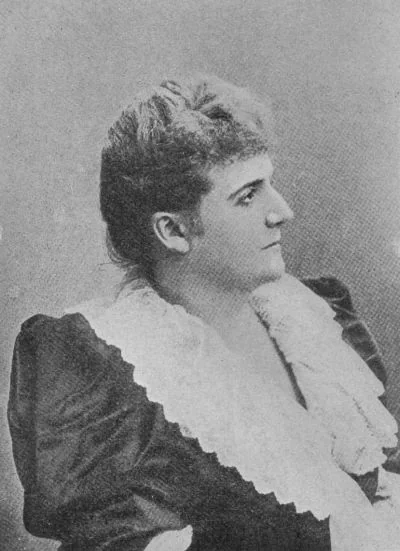
Image from Wikipedia
Image from Wikipedia
Augusta Holmès – Pioneer of the Symphonic Drama between France and Ireland
A composer with grand gesture: from Versailles to the stages of Paris – and back into today’s repertoire
Augusta Mary Anne Holmès (1847–1903) had Irish roots, was born in Paris, and grew up in Versailles – an environment that shaped her musical career just as much as the cultural atmosphere of the Second Empire. She displayed early talent as a pianist but was not allowed to study at the Conservatoire, so she chose the idiosyncratic path of private education. She often wrote her own texts, librettos, and programmatic prefaces, initially publishing under the male pseudonym “Hermann Zenta.” In 1871, she took on French citizenship and placed an accent grave on her name – a symbol of her artistic self-location within French musical life.
Holmès' artistic development led her from salons to major concert stages and the Opéra de Paris. Her symphonic poems Irlande, Pologne, and Andromède combine an orchestral color palette, dramatic condensation, and politically-poetic programs. With the Ode triomphale for the Revolution anniversary in 1889, she created a monumental work for massive choir and orchestra – an event with a spectacular lineup. The fact that her music is now once again present in recordings and performances underscores her cultural influence and the timelessness of her compositional style.
Biography: Education, Influences, Self-Assertion
Holmès grew up as an only child in Versailles. Her mother was English, and her father was from Youghal in Ireland; Alfred de Vigny served as her godfather, whose poetic world she early connected with classical literature. As access to the Conservatoire was denied to women, she learned privately: piano with Mlle. Peyronnet, harmony and counterpoint with organist Henri Lambert, instrumentation with clarinetist Hyacinthe Klosé. She encountered Franz Liszt early on and sought exchange with leading artists of her time – an experience that significantly strengthened her stage presence as a composer and her artistic development.
Around 1876, César Franck became her most important mentor. From his circle, she drew compositional tools: motivic work, organic shaping of form, and orchestral sound balance. At the same time, her encounter with Wagner's music shaped her – not as mere imitation, but as an impulse to expand harmonic language and dramatic architecture. Contemporary voices described her orchestral thinking as energetic, rich in color, and possessing a "virile" gesture, revealing the gender stereotypes of the era while naming the strength of her expression.
Career Paths: From Salon to Opéra
The 1870s and 1880s saw Holmès at the center of the Paris music scene. In programs of large concert series, she presented symphonic poems with a clear profile. Her works build upon the French tradition of programmatic music but extend it with national, mythological, and literary references. Holmès demonstrated dramaturgical sense: she arranged introductions, interludes, and climaxes in such a way that narration and sound form intertwined – an expertise typically associated with stage composition.
A peak and turning point was the opera premiere of her lyrical drama La Montagne noire in 1895. With her own libretto, she created a highly dramatic score that organizes love, fidelity oaths, and political tribal ethos into tight scenes. The fact that this work is being rediscovered in a new production in 2024 shows the relevance of her operatic aesthetics in today’s music theater discourse. The revival marks a late but lasting affirmation of her authority as an opera composer.
Discography in Motion: Rediscoveries on Record
Holmès’ discography focuses in recent repertoire development on the symphonic poems. Particularly prominent are Roland furieux – a “Symphony” based on Ariosto's Orlando furioso –, Irlande, Pologne, and Andromède. A recent orchestral album is dedicated to this selection and illuminates the continuities of her composition and production: long tension arcs, dense brass register, harp colors, expansive crescendos. Reviews emphasize the motivic interlinking in the sense of Franck, as well as the Wagnerian breath in harmony and orchestration.
Also, “La nuit et l’amour,” the famous Andante amoroso from the Ode Symphony Ludus pro patria, has found its place in thematic compilations. Such recordings anchor Holmès in the canon of romantic orchestral poetry alongside D’Indy, Duparc, or Mel Bonis. The new visibility in international catalogs and streaming platforms simultaneously promotes scholarly engagement with her complete discography and the various versions (conductors' scores, piano reductions, adaptations).
La Montagne noire: Opera Drama with Programmatic Force
The opera is set in 17th century Montenegro and combines war drama, friendship oaths, and love tragedy into a compact, four-act tableau. Holmès' libretto draws on Slavic heroic tradition; the musical structure interweaves leitmotifs with choral scenes, interludes, and orchestral tableaux. The world premiere at the Opéra de Paris in 1895 produced thirteen performances – a notable success, yet without a subsequent repertoire run. Its recent rediscovery suggests a new interpretation of the work: as a powerful example of female authorship that acknowledges and palpably exceeds the dramaturgical standards of its time.
Operationally, La Montagne noire is demanding: large-scale choirs, prominent solo parts, and a production that balances scenic realism and musical pathos. This lies at the heart of today’s performances, which sharpen psychological conflicts and the political panorama with modern directorial language.
Body of Work: Symphonic Poems, Cantatas, Songs
Holmès' discography and catalog reveal an impressive range. Key pieces include Irlande (premiered in 1882), which symphonically condenses the Irish freedom myth; Pologne as an aural confession to the Polish cause; Andromède as a mythical narrative poem that works with harps and long-drawn lines; and Roland furieux, a three-movement symphony based on Ariosto, whose driving impulse is almost choreographic. Additionally, there are large-scale vocal works and cantatas such as Lutèce and Ludus pro patria, as well as over a hundred songs, often with their own texts – from the mélodie to the ballade héroïque.
In the chamber music domain, rarities like the Fantaisie in C minor for clarinet and piano are documented. These works showcase the composer’s attention to detail: clearly structured phrases, noble voice leading, idiomatic treatment of instruments. Her songs reveal a secure, text-related prosody, in which poetic images are directly translated into musical gestures.
Style and Composition: Timbres, Dramaturgy, Production
Holmès' style combines French sonic refinement with dramatic pull. In the orchestra, she favors rich brass and woodwind colors, grounded by harps and deep strings. Her composition relies on motivic condensation, organic transitions, and the art of arrangement: instrumental inner choirs, antiphonal effects, colorfully layered tutti. The production of her scores demands careful sound management – transparency in densely scored passages, flexible agogics in crescendos, careful balance of harps and horns.
Wagnerian echoes – sequences, cadences, expansions of tonality – are present, but never merely derivative. Instead, the late Romantic idiom serves as vocabulary for her own narrative worlds: national symbols, mythological themes, political imagery. This expertise makes her discography particularly interesting today, as it exemplarily illuminates the transitional zone between French program music, symphonic cantata, and opera.
Cultural Influence and Reception: Forgetting, Rediscovering, Canonizing
In her lifetime, Holmès enjoyed recognition, exchanged ideas with leading musicians, and composed for state-sponsored major events. However, her fame faded – a fate shared by many female composers of the 19th century. In recent years, however, her music has experienced a vital renaissance. New recordings profile her symphonic poems; opera houses are venturing to present her stage works; research and editions are uncovering sources, manuscripts, and alternative versions. Critical reception highlights her orchestral mastery, discusses her positioning between the Franck school and Wagner tradition, and appreciates the autonomy of her dramaturgy.
This rediscovery has cultural-political dimensions: Holmès represents authorship that transcended the boundaries of genre, a musical career against institutional hurdles, and works that think of national and literary themes in a European context. Her return to concert halls and catalogs sharpens the view of the 19th century – more diverse, experimental, and international than the canon has long suggested.
Selected Milestones
The granting of French citizenship in 1871 marks a biographical and symbolic watershed: home in France, remembrance of Irish heritage. The Ode triomphale in 1889 showcased her ability for large forms. Irlande (1882) sounds like a musical editorial, while Pologne serves as a sister work with political edge. Roland furieux presents a symphony as a dramatic arc, and Andromède reveals the poetic side of her orchestration. La Montagne noire ultimately embodies the synthesis of libretto, composition, and scenic thinking – a key work in her artistic development.
Why Listen to Augusta Holmès Today?
For those who love French Romanticism, Holmès reveals a voice between pathos and poetry. Her orchestral works shine with colorful instrumentation, and her vocal music connects text intelligence with melodic breath. In concert, the impact of her grand crescendos impresses, while in the recording studio, the density of production captivates. The current discography allows for a representative overview – from national tone poems to mythical scenes to operatic tableaux – and confirms her authority in the late 19th-century repertoire.
Conclusion
Augusta Holmès is a composer of grand gesture: sonorous, narratively precise, and dramaturgically skilled. Her works intertwine symphonic poetry, cantata, and opera into an individual musical language. The newly sparked reception – on stages and recordings – makes her music a worthwhile discovery for listeners who appreciate romantic orchestral colors, passionate themes, and artful composition. Her artistic development from private study to state-sponsored festival music and her own opera on the Paris stage resonates to this day. The call is clear: experience this music live – for its energy unfolds in the space where sound, scene, and emotion converge.
Official Channels of Augusta Holmès:
- Instagram: No official profile found
- Facebook: No official profile found
- YouTube: No official profile found
- Spotify: No official profile found
- TikTok: No official profile found
Sources:
- Wikipedia (German) – Augusta Holmès
- Wikipedia (English) – Augusta Holmès
- Bibliothèque nationale de France – Person Entry Augusta Holmès
- IMSLP – Irlande (Score and Work Data)
- The Guardian – Album Review “Symphonic Poems”, 25.07.2024
- Presto Music – Augusta Holmès: Symphonic Poems (CPO)
- MusicBrainz – Release “Symphonic Poems” (2024)
- City of Dortmund – La Montagne noire (Premiere 13.01.2024)
- Operabase – La Montagne noire (Theater Dortmund, 2024)
- Palazzetto Bru Zane – La Montagne noire (Production Page)
- Oxford Song – Composer Page Augusta Holmès
- The Morgan Library & Museum – La guerrière (Print/Materials)
- Wikipedia: Image and Text Source
Upcoming Events
Long Live France! Augusta Holmès – Biographical Concert