
Aenne Biermann
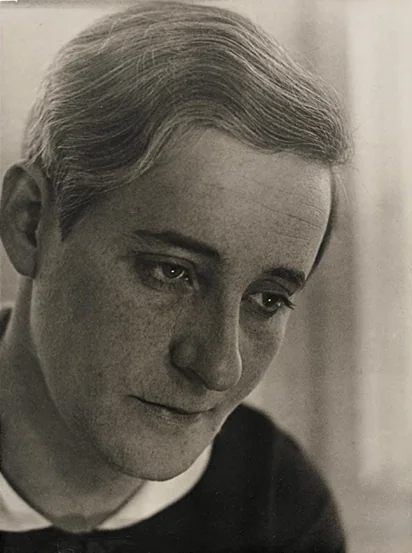
Image from Wikipedia
Image from Wikipedia
Aenne Biermann – Icon of Avant-Garde Photography and New Objectivity
How Aenne Biermann Redefined Seeing with Radical Clarity
Aenne Biermann (born March 3, 1898 in Goch; died January 14, 1933 in Gera) is considered one of the most influential photographers of the Weimar Republic. As a self-taught artist, she developed a distinctive, modern visual language within just a few years, exemplifying the visual thinking of "New Objectivity." With precise composition, nuanced tonal range, and an analytical closeness to her subjects, she created close-ups of plants, minerals, everyday objects, and portraits that still set standards today. Although she did not have a career in music, her artistic development followed a similarly stringent narrative arc: from private experiments to international exhibits and canonical publications. This contribution situates her work within the framework of cultural history, recounts her biography, analyzes her style, reception, and legacy – and illustrates why Biermann’s photographs remain present in museums worldwide.
Background, Life Path, and Early Artistic Steps
Growing up in the Lower Rhine region, Aenne Biermann moved to Gera in 1920, where she lived with her husband Herbert Biermann and started a family. Without formal training, she turned to photography—initially to portray her children (born in 1921 and 1923). Emerging from her home environment, a serious artistic practice developed: she experimented with angles, distances, and lighting, reduced distracting contexts, and focused on her subjects as autonomous forms. This transition from private snapshots to conscious composition marks the origin of her artistic development. By the mid-1920s, she had crystallized her aesthetic: clear lines, objective light, and surface emphasis – values closely aligning with New Objectivity.
At the same time, an intellectual environment formed in Gera. Contacts with art-oriented circles, readings of photography theory, and engagement with international modernism strengthened her aspirations. Biermann worked with plate cameras and gelatinsilver prints, refining exposure and focus planes and utilizing the format for a deliberately calm, tension-filled image architecture. Observation became method, and from method emerged style – her stage was the image frame, her presence was an uncompromising closeness to the object.
Self-Taught with Distinction: From Amateur Practice to Avant-Garde Photography
Biermann’s artistic development illustrates how an apparently "amateur" practice can swiftly evolve into an independent position. She published in photography journals, studied international contributions on composition, exposure series, and negative processing, and translated her reading into an independent visual grammar. The bodies of work – studies of plants, stones, fruits, everyday objects, and portraits – are united by a compositional concept: the image space is organized through form contrasts, light-dark modulation, and a dramatic focus trajectory. Nothing appears incidental; the photographic production is the result of conscious arrangements.
Her close-ups reveal how structure can be interpreted as an aesthetic event. Folds, fibers, skins, and edges acquire a plastic presence in her images. At the same time, the reference to reality remains intact; Biermann does not transform the surreal but intensifies the real. This is New Objectivity in its purest form: sober, precise, yet sensual. In this consistency, she became one of the most important representatives of German avant-garde photography.
Breakthrough and Visibility: Exhibitions 1928–1931
The late 1920s mark a period of breakthrough. In 1929, Biermann was featured in major overview exhibitions, including "Film and Photo" in Stuttgart and "Photography of the Present" (among others at the Museum Folkwang). The international press and professional community recognized her works as exemplary contributions to modern photography. In the same year, she held a solo exhibition in Munich (Kunstkabinett) – a strong signal of her authority within the scene. In 1930, under the influence of Franz Roh, the monograph "Aenne Biermann. 60 Photos" was published – a key work in the history of photography books that permanently established her position in the canon.
This density of exhibitions and publications illustrates how rapidly her career accelerated. Biermann acted in dialogue with international modernism without needing to be permanently present in metropolitan centers like Berlin. Her images convinced through quality, compositional rigor, and a clear, innovative photographic language – criteria that have persisted in catalogs, museums, and collections.
Visual Language, Technique, and Composition: The Art of Precise Seeing
In Biermann’s work, genre, composition, and production merge into a cohesive aesthetic. Her studies of plants and fruits – such as peppers, leaves, or flowers – employ close-up perspectives to make materiality tangible. Tonal values are finely graduated; the studio arrangement eliminates chance. Portraits seem reduced, frontal, yet intimate. This clarity generates presence: the individual object emancipates itself from context and transforms into a visual event.
Technically, she operated within the classic darkroom work of her time: careful negative development, precise cropping, and deliberately set contrasts. Characteristic is a kind of "photographic minimalism": no spectacular effects, but disciplined means. This production attitude sharpens the authority of the images – and makes them relevant to art and photography history, from the Weimar Republic to contemporary collection presentations.
Networks, Reception, and Canonization
Collaboration with art historian Franz Roh was crucial for Biermann’s visibility. With "60 Photos" (1930), she received an early monographic recognition that highlighted her signature within a tightly assembled photo essay. Through journal contributions and group exhibitions, a critical reception developed that emphasized her contribution to modern photography: objectivity as style, concentration as method, intimacy with objects as theme. Museums like the Museum of Modern Art (New York), the National Gallery of Art (Washington), the National Galleries of Scotland, or the International Center of Photography hold works or entries related to her.
With this museum presence, Biermann’s work has been inscribed into an international institutional history. Her inclusion in collections, exhibition histories, and art-historical online portals ensures her continuing visibility in the discourse – a clear sign of authority and lasting relevance.
Publications and Legacy of Works
The monograph "Aenne Biermann. 60 Photos" is regarded as a milestone in the history of photography books during the interwar period. The book condenses her work into an aesthetic narrative: from form-conscious still life studies through structure-emphasizing close-ups to reduced portraits. It demonstrates how an autonomous visual language emerges that operates beyond journalistic or documentary functions. Additional contributions in photography journals and catalogs from the 1920s and 1930s complement this publication.
The legacy of her works is only partially preserved due to political upheavals and family emigration. A significant portion of her negative archive is considered lost. Therefore, museum holdings, collector engagement, and research projects that secure, digitize, and contextualize her oeuvre are all the more vital. It is precisely in this interplay of collection, scholarship, and exhibition that a reliable foundation for future interpretations of her work is laid.
Style Analysis: New Objectivity, Material Aesthetics, and Intimacy
Biermann’s style closely relates to New Objectivity but emphasizes an intimate closeness to the subject. She is less interested in spectacle and more in essence: form, surface, material. In image composition, vertical and horizontal axes dominate, clear diagonals, and rhythmically repeated forms. The arrangement creates a silent tension that guides the eye. Particularly striking is the connection between an analytical gaze and haptic density – a photography that makes structures "audible" and gains intensity through stillness.
Her production points to a modern understanding of composition: control over light and shadow, balance of positive and negative forms, avoidance of decorative elements. In this way, she set a standard that significantly influenced later object photography and debates around photogenic objects. Her images function as a visual essay on the grammar of things.
Cultural Influence and Legacy
The impact of Biermann’s work reaches far beyond her brief creative period. In the international history of photography, she stands alongside positions like Albert Renger-Patzsch or the Czech avant-gardes without losing her stylistic identity. Her unique intimacy with objects resonates to this day: Young photographers are increasingly adopting the emphasis on texture, serial motifs, and reduced compositions. Museum exhibitions and publications of the 21st century recontextualize her visual language in the light of material aesthetics, minimalism, and "object-oriented" seeing.
A significant driver of her legacy is the "Aenne Biermann Prize for German Contemporary Photography," awarded since 1992 in Gera. This competition serves as a bridge between historical avant-garde and contemporary practice. It promotes innovative visual concepts and carries Biermann’s impulse – precise, focused seeing – into the future. The associated jury, exhibition, and publication work keeps her oeuvre alive in the public consciousness.
Current Projects, Research, and Exhibitions (2024–2026)
Even today, Biermann’s work remains present. Museums and foundations showcase her works in thematic contexts of modern photography; collection presentations and online dossiers locate her within the New Objectivity. Recent exhibitions and reprises – including internationally based shows utilizing holdings from the Ann and Jürgen Wilde Foundation – make her visual language accessible to a broad audience. Research catalogs, museum contributions, and digital archive resources consolidate the source materials, including milestones from 1929/1930.
Particularly noteworthy is the continuous activity surrounding the Aenne Biermann Prize in Gera, whose recent calls and presentations demonstrate how strongly the historical reference becomes productive: The criteria explicitly align with Biermann’s innovative representation. Simultaneously, new and reissued relevant publications as well as additions and loans to collections solidify her presence in international institutions. Thus, her artistic development remains part of a vibrant discourse among history, the present, and curatorial practice.
Conclusion: Timeless Clarity – Why Aenne Biermann Inspires Today
Aenne Biermann radically condensed photographic seeing: with concentrated composition, flawless tonal work, and a deep trust in the expressive power of objects. Her artistic development was comet-like – from private snapshots to a canonical voice of avant-garde photography. Those interested in visual language, material aesthetics, and New Objectivity will discover in her works a school of seeing. The cultural influence extends into exhibitions, collections, and competitions of the present; her authority is secured, and her trustworthiness is evidenced by sources and holdings.
Anyone who wishes to experience this clarity live should visit museums and exhibitions showcasing Biermann’s works and follow the discourse on contemporary object photography. There one can feel how precise photography can resonate – as a quiet yet compelling composition that lingers long after.
Official Channels of Aenne Biermann:
- Instagram: No official profile found
- Facebook: No official profile found
- YouTube: No official profile found
- Spotify: No official profile found
- TikTok: No official profile found
Sources:
- Wikipedia (DE) – Aenne Biermann
- Museum of Modern Art – Object:Photo Dossier on Aenne Biermann
- Museum of Modern Art – Collection Entry Aenne Biermann
- City of Gera – 15th Aenne Biermann Prize for German Contemporary Photography
- Kicken Berlin – Artist Profile Aenne Biermann
- Pinakothek der Moderne – Magazine Contribution on Aenne Biermann
- International Center of Photography – Entry Aenne Biermann
- National Gallery of Art (Washington) – Artist Page Aenne Biermann
- National Galleries of Scotland – Artist Profile
- Neue Galerie New York – "Aenne Biermann: 60 Photos"
- Jewish Women’s Archive – Aenne Biermann
- Museum Folkwang – Press Materials on Aenne Biermann
- Wikipedia: Image and Text Source